 by
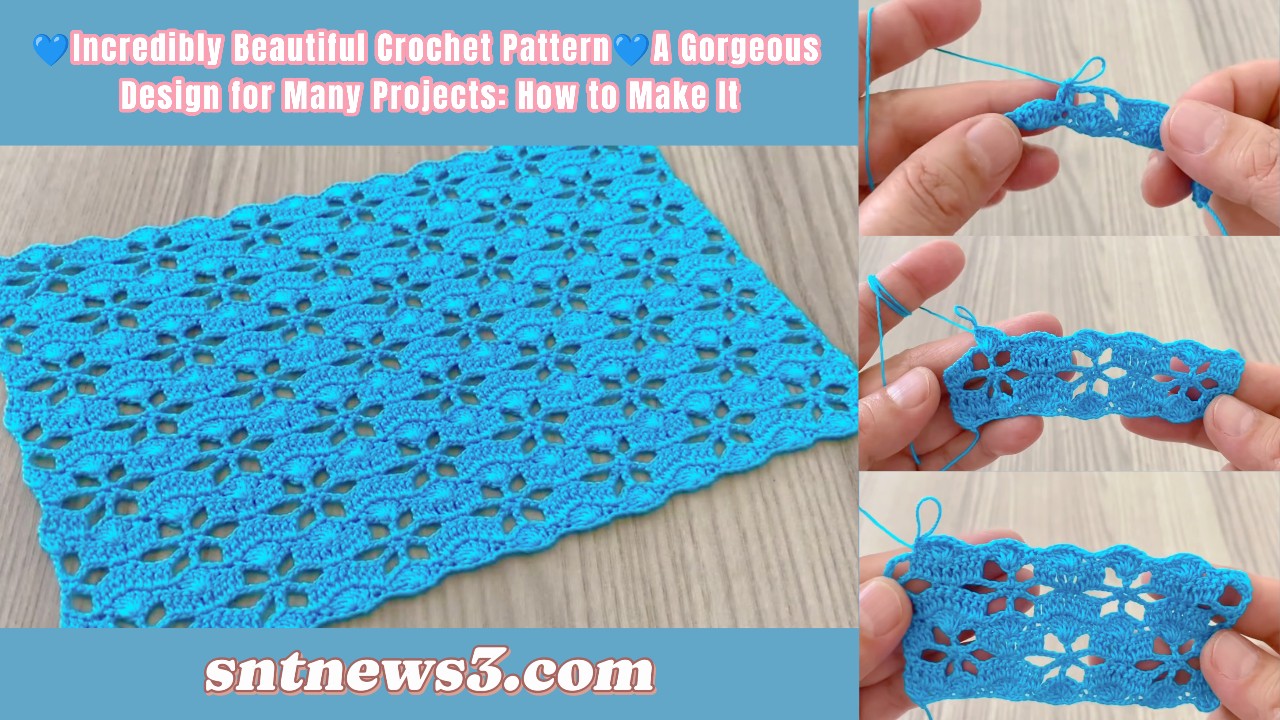
by This tutorial demonstrates a repeating lace crochet stitch made with chain arches and double-crochet shell clusters, which are commonly used to create light decorative fabrics for projects such as shawls, blouses, blankets, scarves, and table runners. Crochet lace patterns often repeat only a few rows, making them easy to scale for many projects.
Below is a very detailed step-by-step written tutorial that follows the structure shown in Crochet with Nese.
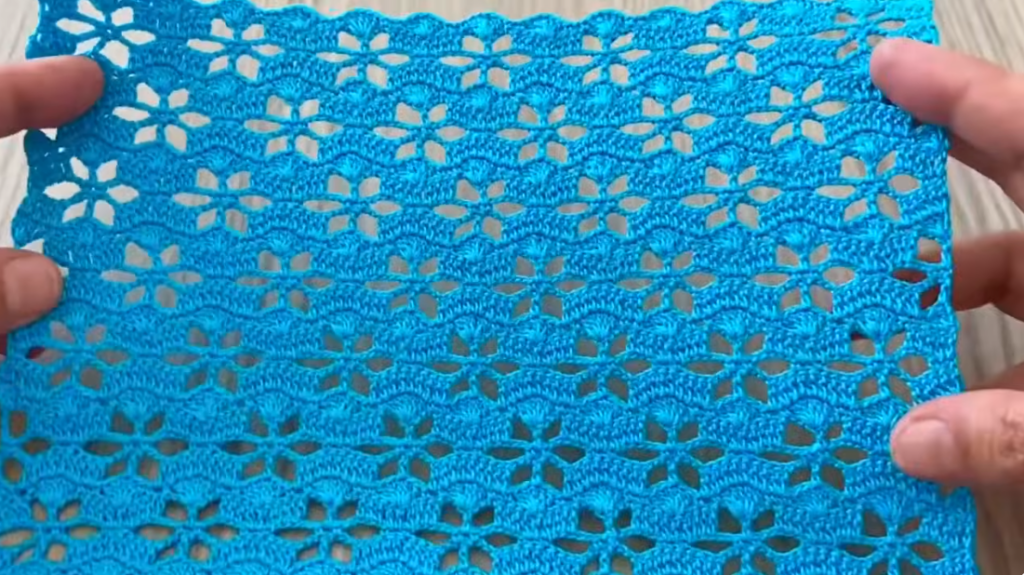
Materials 🧶
- Yarn: cotton, bamboo, or acrylic yarn (light / medium weight)
- Crochet hook: 3–4 mm
- Scissors
- Yarn needle (to weave in ends)
Crochet Abbreviations (US Terms)
| Abbreviation | Meaning |
|---|---|
| ch | chain |
| sc | single crochet |
| dc | double crochet |
| sl st | slip stitch |
| sk | skip |
| sp | space |
Pattern Multiple
Start with a foundation chain multiple of 6 + 2 extra chains.
Examples:
- 32 chains
- 38 chains
- 44 chains
- 50 chains
The number of chains determines the width of the project.
Step 1 — Make the Foundation Chain
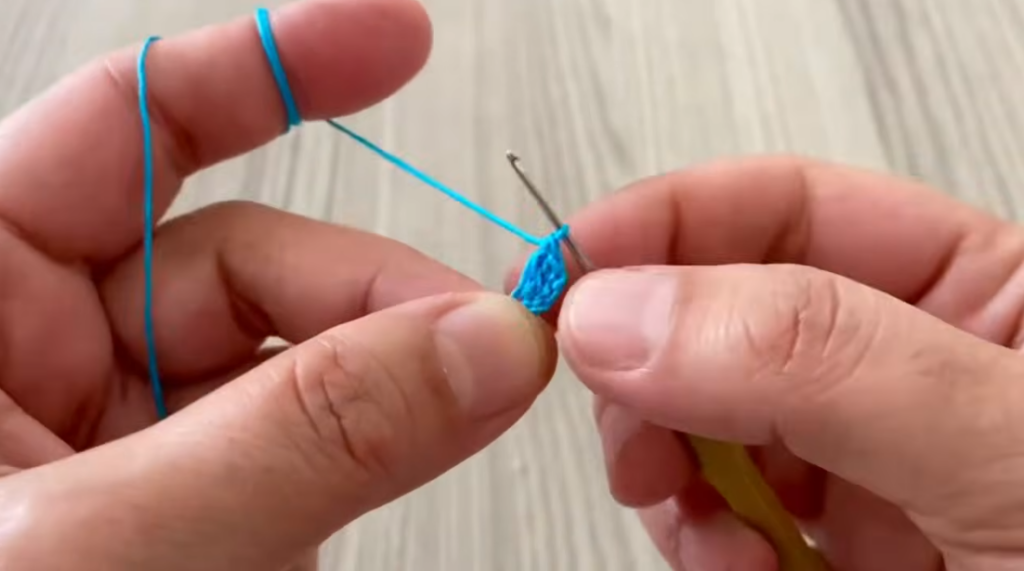
- Make a slip knot.
- Insert hook into the loop.
- Yarn over and pull through to create a chain stitch.
- Continue making chains until you reach the desired length.
- Add 2 additional turning chains.
Row 1 — Foundation Row
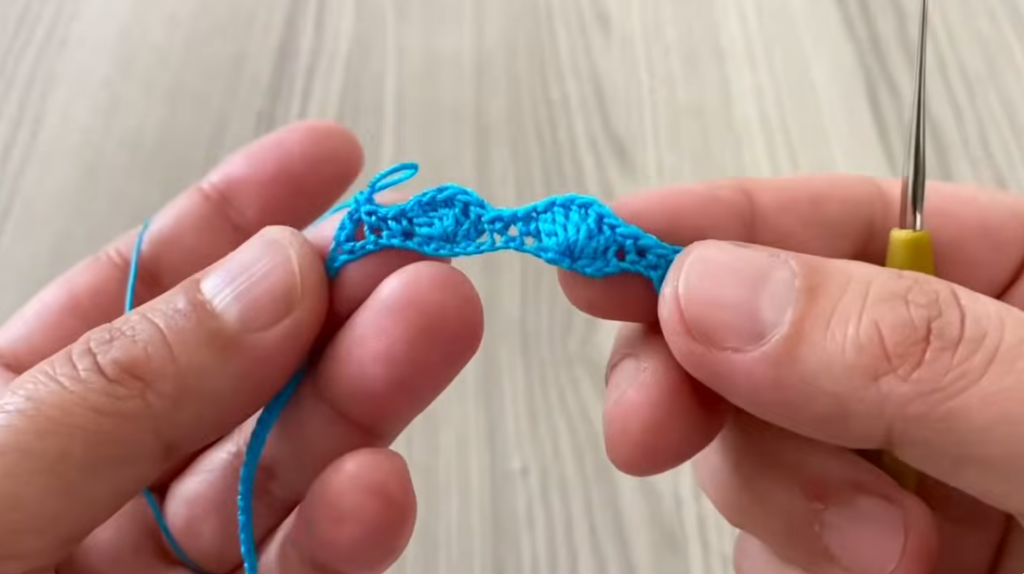
This row stabilizes the pattern.
- Insert hook into the 2nd chain from the hook.
- Yarn over and pull through.
- Yarn over again and pull through both loops → 1 sc made.
- Continue making 1 single crochet in each chain across the row.
You now have a solid base row of single crochet stitches.
Turn your work.
Row 2 — Creating Chain Arches
This row forms the open lace spaces.
- Chain 4.
- Skip 2 stitches.
- Make 1 single crochet in the next stitch.
- Chain 4 again.
- Skip 2 stitches.
- Make 1 single crochet in the next stitch.
Repeat across the row:
ch4 → skip 2 → sc
At the end of the row you will see evenly spaced chain loops.
Turn your work.
Row 3 — Shell Motif Row
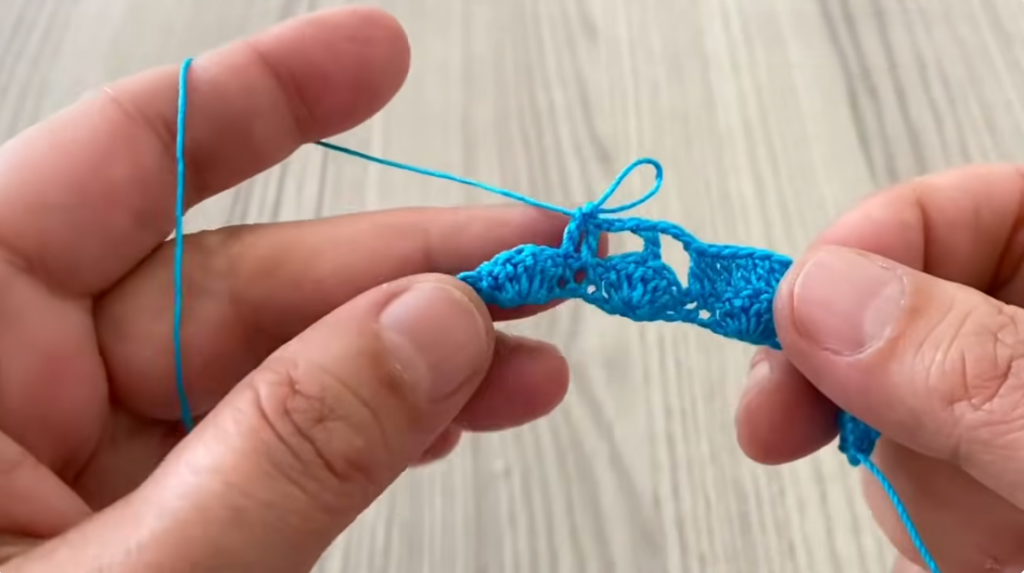
This row forms the decorative fan/shell pattern.
- Slip stitch into the first chain-4 loop.
- Chain 3 (counts as first double crochet).
- In the same chain loop crochet:
- 4 dc
- Chain 2.
- Crochet 5 more dc in the same chain loop.
You now have a large shell cluster:
(5 dc, ch2, 5 dc)
- Move to the stitch between the loops.
- Make 1 single crochet.
- Move to the next chain loop and repeat:
(5 dc, ch2, 5 dc)
Continue across the row.
Turn your work.
Row 4 — Creating the Next Chain Arches
This row prepares the structure for the next shell row.
- Chain 1.
- Make 1 single crochet in each stitch across the shell.
- When you reach the chain-2 space in the center of the shell, crochet:
- 1 sc
- ch4
- 1 sc
This creates a new chain loop above the shell center.
- Continue making single crochet across the shell stitches.
- Repeat the (sc, ch4, sc) in each shell center.
Turn your work.
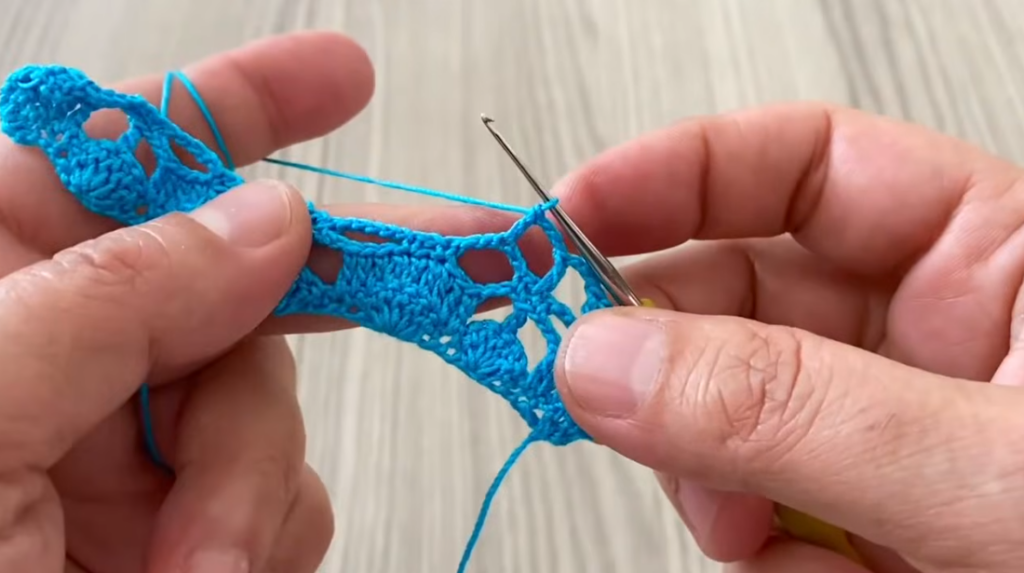
Row 5 — Repeat Shell Row
- Slip stitch into the chain-4 loop.
- Chain 3.
- In the same loop crochet:
- 4 dc
- ch2
- 5 dc
- Make 1 sc in the stitch between shells.
- Move to the next chain loop and repeat.
Continue across the row.
Turn work.
Repeat the Pattern
Repeat these rows:
- Row 4 (chain loop row)
- Row 5 (shell motif row)
As you repeat them, the shells align and form beautiful diamond-like lace shapes.
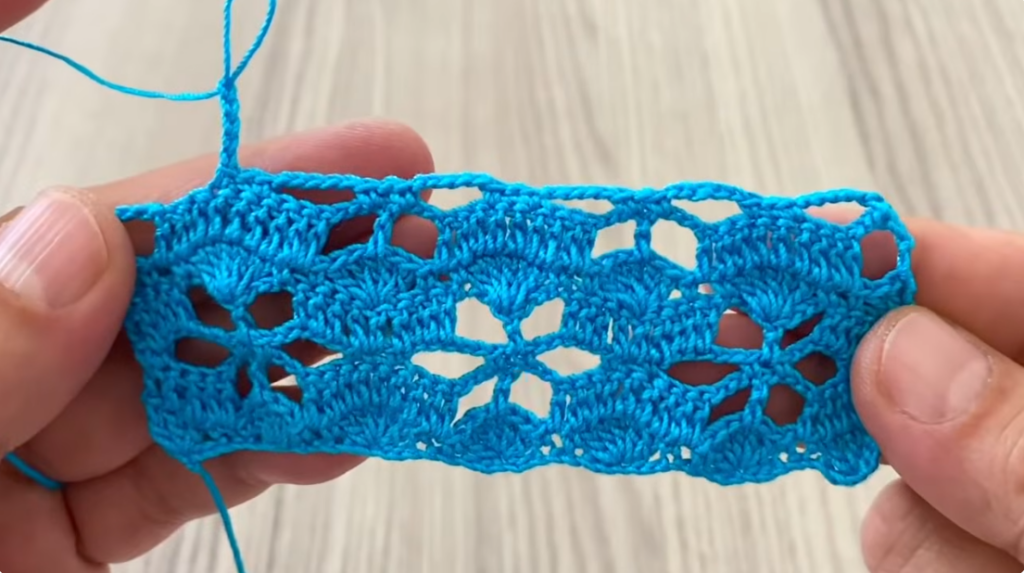
Continue Until Desired Length
Typical sizes:
Shawl
- 60–80 rows
Blouse panel
- crochet until the piece reaches body measurement
Scarf
- about 150–170 cm long
Optional Decorative Border
Border Row
- Crochet single crochet around the edges.
Scallop Edge
Repeat along the edge:
- 5 dc in one stitch
- skip 2 stitches
- 1 sc in next stitch
This produces a soft scalloped lace border.
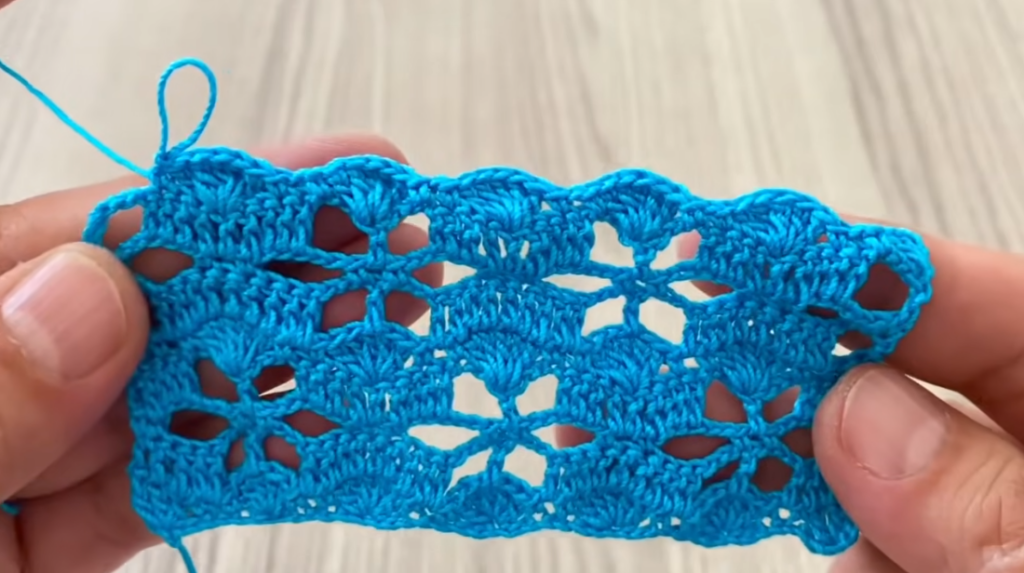
Finished Pattern
This crochet stitch produces a light open lace fabric with repeating shells and chain arches.
It is ideal for:
- Summer blouses
- Shawls
- Scarves
- Baby blankets
- Table runners
Crochet patterns often repeat small stitch sequences across rows, allowing the same design to be used for many different projects.
VIDEO: