 by
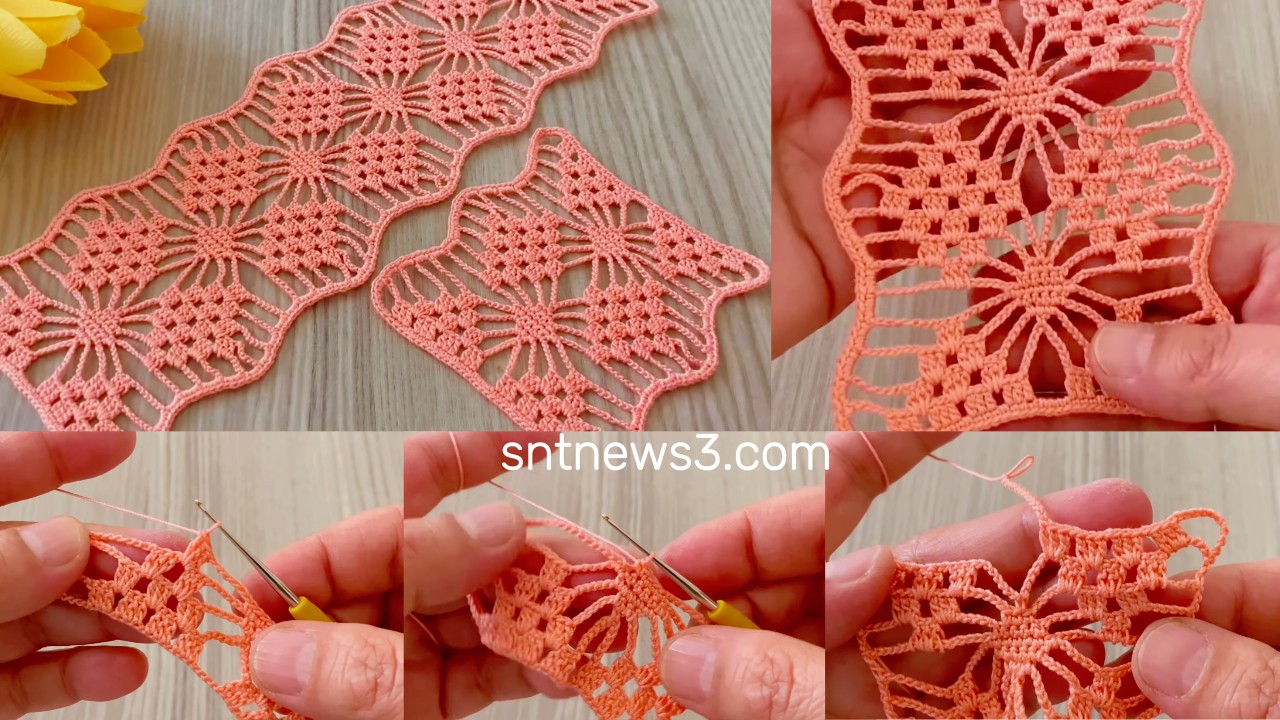
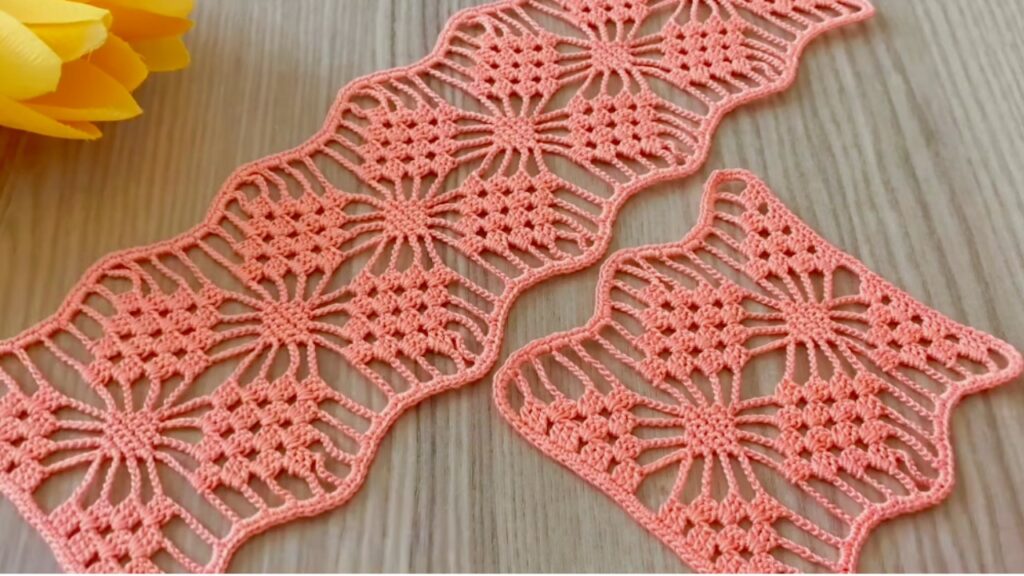
by Hello crocheter!! Here’s a clear, step-by-step text tutorial you can crochet right away that reproduces the “Tile Patterned Multipurpose Lace” style from Crochet with Nese: a floral medallion that converts to a square tile you can join into runners, shawls, blouses or home pieces. I give exact round instructions, stitch counts to check after each round, join methods (JAYG + sew-after), blocking, troubleshooting and quick variations.
🧩 Tile-Patterned Multipurpose Lace — Step-by-Step Tutorial
Finished blocked tile: ~10–13 cm (4–5 in) with DK yarn + 3.5–4.0 mm hook.
Yarn: DK / sport or cotton thread for crisp tiles (cotton gives crisper tiles; acrylic/wool gives drape).
Notions: yarn needle, blocking pins, measuring tape, scissors.
Terminology: US crochet terms.
Abbreviations
- ch = chain
- sl st = slip stitch
- sc = single crochet
- hdc = half double crochet
- dc = double crochet
- tr = treble crochet
- pic = picot (ch 3, sl st into base)
- sp = space
- st(s) = stitch(es)
- rep = repeat
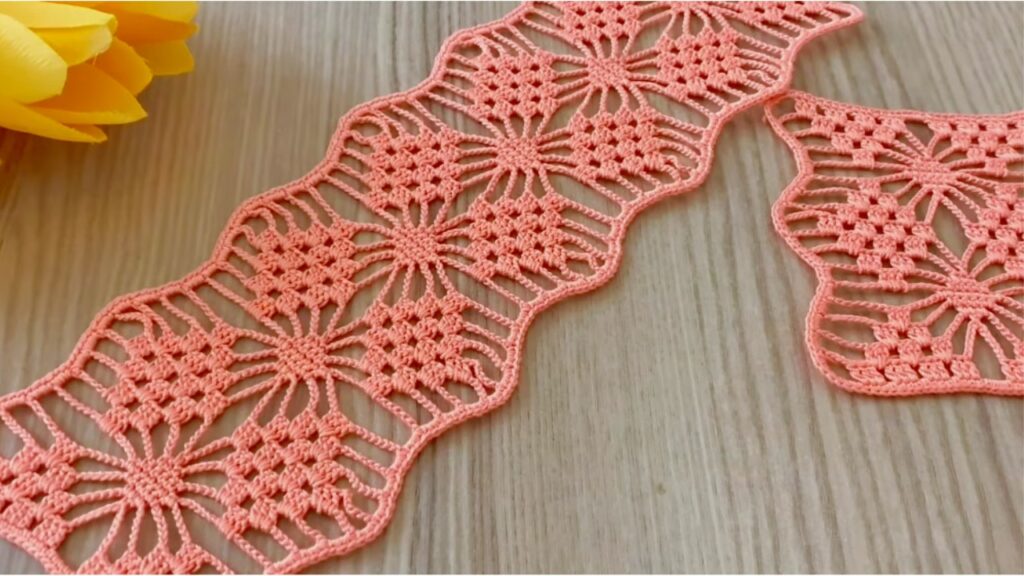
Short overview / design intent
- Center: circular floral medallion (puffy petals).
- Middle: lacy arches and decorative ribs for texture.
- Outer: convert to a square tile with side loops/corner loop anchors so tiles join neatly in grids.
- Final: scalloped picot edge for the pretty finish.
You’ll be able to join tiles either using Join-As-You-Go (JAYG) for a one-step assembly or blocking + sewing afterward.
Pattern (work in rounds)
Round 1 — Center (foundation)
- Make a magic ring.
- ch 3 (counts as dc). Work 15 dc into the ring. (ch-3 + 15 dc = 16 dc.)
- Pull ring closed. sl st to top of ch-3 to join.
Check: 16 dc.
Round 2 — Loop foundation (petal bases)
- ch 4, skip next dc, sc in next dc — repeat around.
- You’ll create 8 ch-4 loops separated by sc. Join with sl st.
Check: 8 ch-4 spaces.
- You’ll create 8 ch-4 loops separated by sc. Join with sl st.
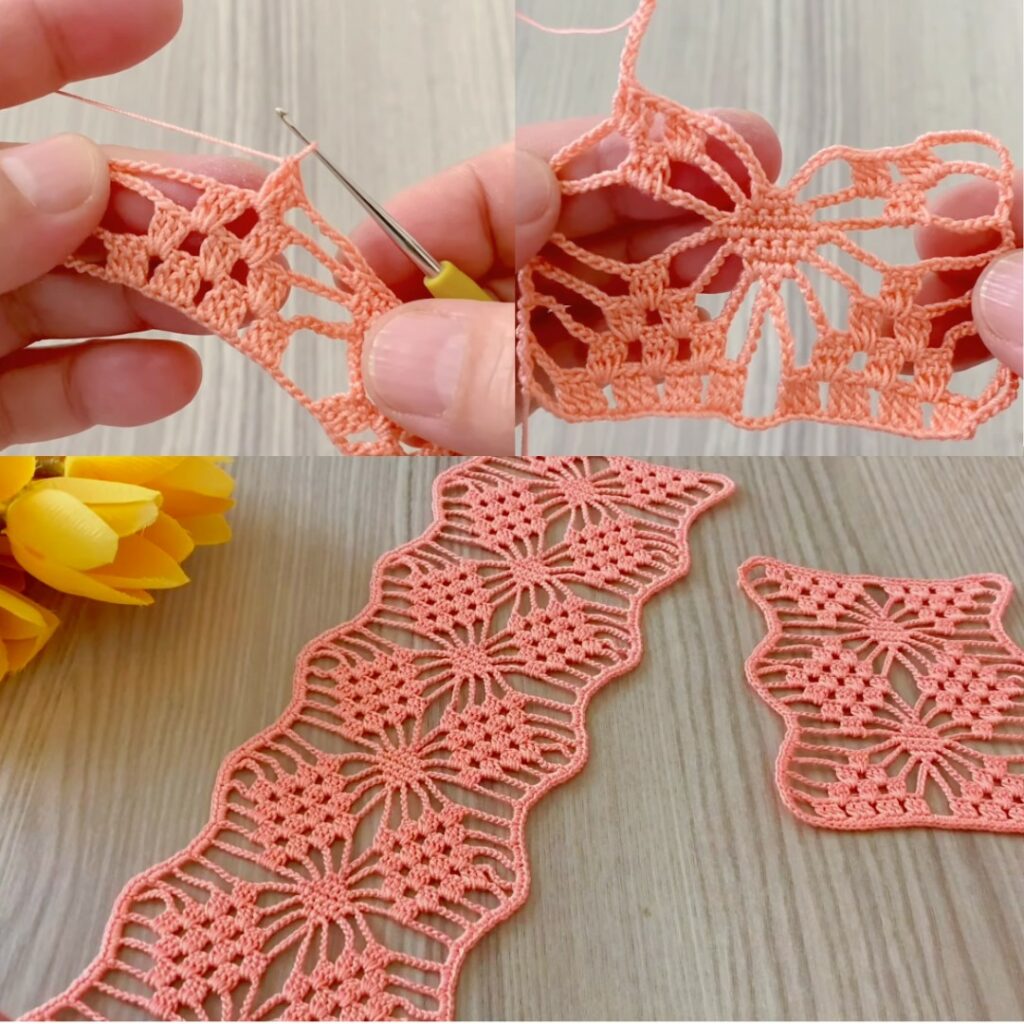
Round 3 — Puffy petals (8 petals)
- In each ch-4 space work (sc, hdc, 7 dc, hdc, sc) — all into the same ch-4 sp.
- Sl st into the next ch-4 space and repeat for all 8. Join.
Check: 8 prominent petals.
Round 4 — Tidy base round (sc round)
- Rejoin between petals. Work sc evenly around the petal bases to make an even circular boundary. Aim for ~10 sc per petal area (adjust ±1–2 so motif lies flat). Join with sl st.
Check: smooth circular edge (not cupped or ruffled).
Round 5 — Large chain arches (lacy frame)
- From each petal tip: sl st to outer tip → ch 7 → anchor into the sc round between the next petals with (tr, ch 2, tr, ch 2, tr) worked into that sc or small space → sl st to next petal tip.
- Repeat around to form 8 large arches. (If ch-7 feels too long/short for your yarn/hook, use ch-6 or ch-8.) Join.
Check: 8 equally spaced arches.
Round 6 — Decorative ribs inside arches
- Into each ch-arch work: sl st into arch base → ch 3 → dc into top of first tr → ch 1 → dc into top of middle tr → ch 1 → dc into top of last tr → ch 3 → sl st into arch base.
- Repeat for all 8 arches. (Simpler alternative: 3 dc separated by ch-1 inside each arch.) Join.
Check: each arch has 3 inner ribs.
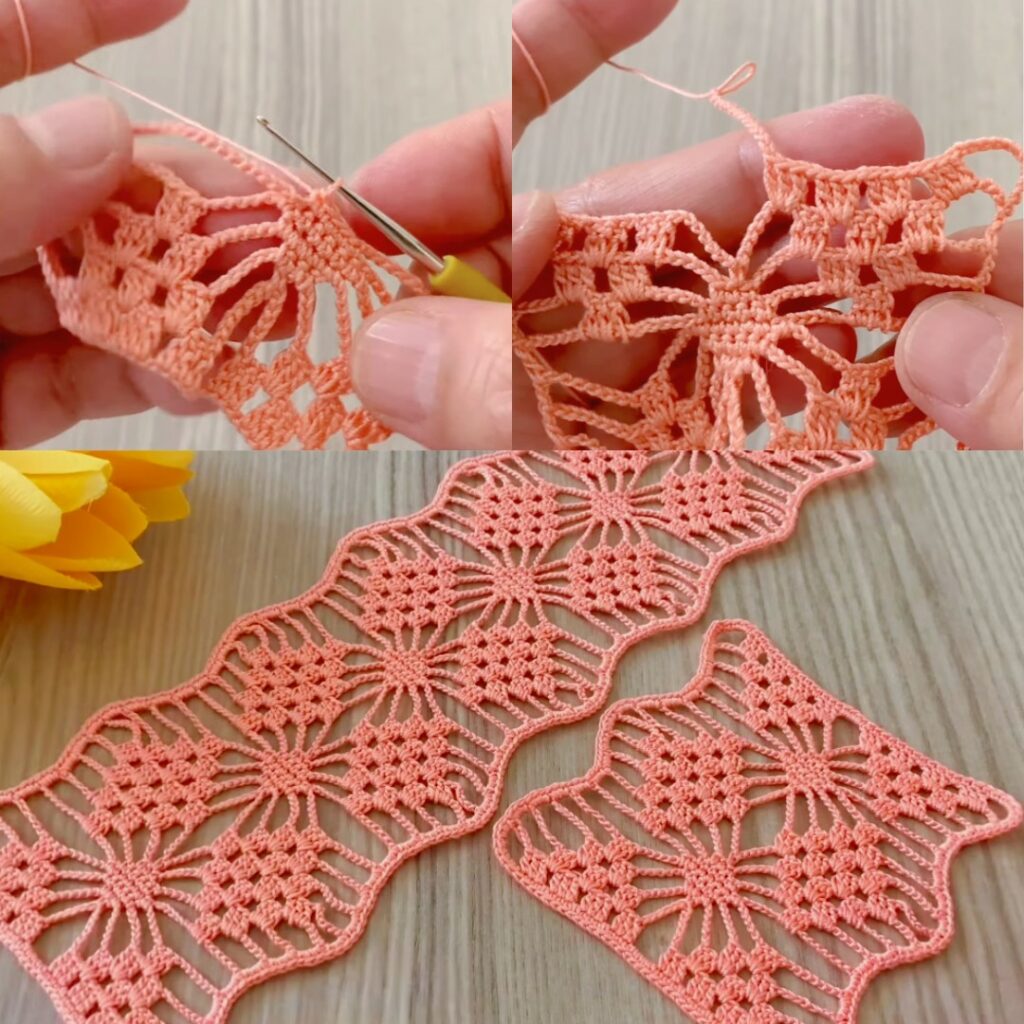
Round 7 — Convert circle → square (side loops & corner loops)
- Mark four quarter points (every 2 petals = 90° apart). Rejoin at a quarter marker.
- Work along side between corners: sc X, (sc, ch 4, sc) repeated Y times, sc X then ch 6 for corner loop. Important: make the same X and Y on all four sides so tiles match when joined.
- Example practical distribution (adjust for your size): sc 10, (sc, ch 4, sc) × 3, sc 10 → ch 6 corner → repeat next side.
- Join and fasten off (or continue if you want to add edging).
Check: tile now has 4 corner ch-6 loops and evenly spaced side loops — blocks to a square.
Round 8 — Outer scallop & picot finish
- Rejoin and work the final decorative edge around the outer side-loops: sc 3, (pic: ch 3, sl st into same st), sc 4 — adjust sc counts so scallops lie flat across each side element.
- Place picots at regular intervals for the dotted look. Join, fasten off, weave in ends.
Check: scallops/picots even; tile lies flat after blocking.
Blocking & shaping
- Pin tile to blocking board/towel into a square. Stretch corner loops outward to create crisp corners and pin every picot to sharpen the scallop. Mist with water or steam lightly and allow to dry fully. Blocking is essential — it turns the round medallion into a neat square tile and makes joins accurate.
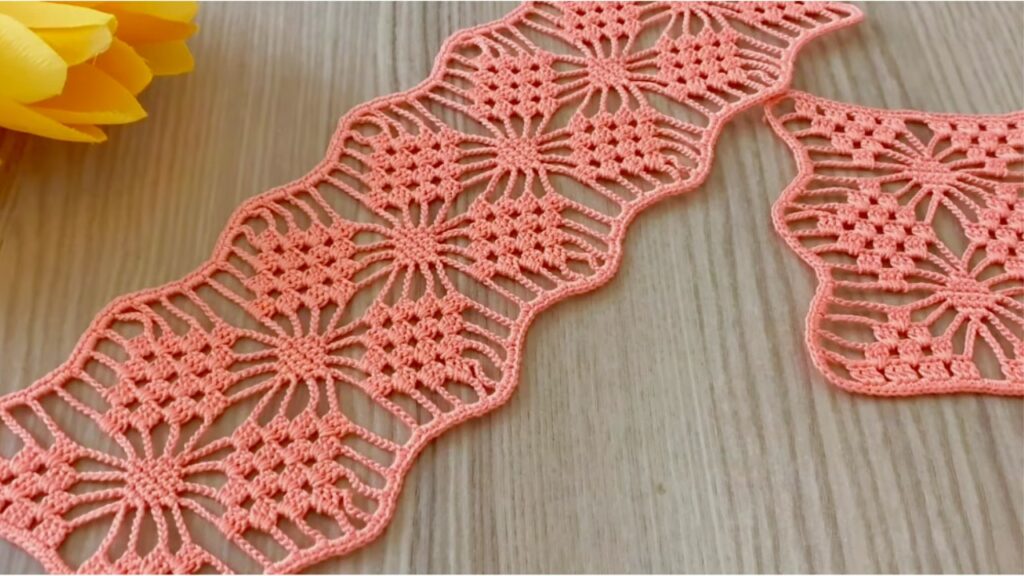
How to join tiles
Option A — Join-As-You-Go (JAYG) — recommended for flat seams
- Crochet first tile completely.
- For each new tile, work through Round 7 and begin Round 8 (outer scallop). When you reach a spot that corresponds to a finished adjacent tile, replace that sl st or the stitch used for the scallop with a sl st into the corresponding stitch or picot of the finished tile. Continue the scallop and join at each corresponding point (side loops and corners).
- JAYG attachment points: the side ch-4 loops and the corner ch-6 loops. This produces neat, nearly invisible joins and saves sewing.
Option B — Sew-after method (block then sew)
- Make and block all tiles. Pin them in desired layout on blocking board.
- Use a tapestry needle & matching yarn to whipstitch or mattress-stitch through the side loop/sc rounds (or use a single crochet join around outer loops if you prefer a visible border). This gives you flexibility in placement before final joining.
Project layouts & counts (quick guide)
Measure your blocked tile width M exactly, then compute counts.
Example (M ≈ 12 cm):
- Narrow runner (1 × N): for 120 cm runner length → N = 10 tiles.
- Runner wider (2 × N): width = 2 × 12 = 24 cm; choose N length accordingly.
- Shawl rectangle: 6 × 10 tiles → ~72 × 120 cm.
- Blouse (front panel S): 3 × 3 motifs per panel (adjust rows for length); two panels for front/back or join-as-you-go to make one continuous piece and leave neck/armholes open.
Edging & finishing suggestions
- After joining: work 1 round sc around the whole assembled piece for stability, then add a scallop/picot round to match tile edges.
- For blouse hems: add 1 round dc to add weight so garment hangs nicely.
- For runner/table: press & starch (cotton) after blocking for crispness.
Troubleshooting & adjustments
- Tile cups upward: loosen tension or use a larger hook for petals/arches; block strongly.
- Tile ripples/ruffles: reduce chain length in arch round (ch-6 instead of ch-7) or remove a couple of sc from tidy base round.
- Tiles don’t line up when joining: ensure Round 7 side loop counts (X and Y) are identical on all tiles before joining. Count stitches per side before joining.
- Joins gap: add an extra sl st into the join point or use a tight whipstitch if sewing. JAYG is easiest when tiles are blocked before joining.
- Tile too big / small: change yarn weight or hook; increase petal dc (7→9) and arch chains (ch-8/9) for larger tile; decrease for smaller.
Quick variations
- Two-colour tile: change color after Round 3 (petals) for petal contrast, or color the square frame separately.
- More open lace: lengthen arch chains (ch-8/9) and use tr instead of dc for ribs.
- Denser tile (for runner): shorten arch chains and replace dc ribs with hdc.
- Beaded tiles: add small beads on arch ribs or at picots for sparkle (slide bead onto yarn before crocheting and work bead into stitch).
Mini troubleshooting checklist (counting)
- After Round 1: 16 dc.
- After Round 2: 8 ch-4 spaces.
- After Round 3: 8 petals.
- After Round 5: 8 arches.
- After Round 7: 4 corner loops (ch-6) and consistent side loop counts per side.
If any number is off, rip to the last round with correct count and adjust.
VIDEO: