 by
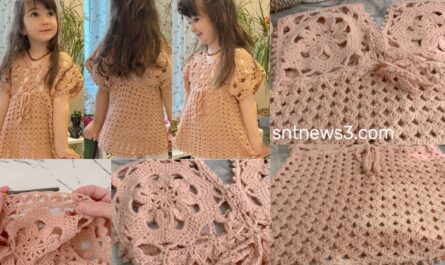
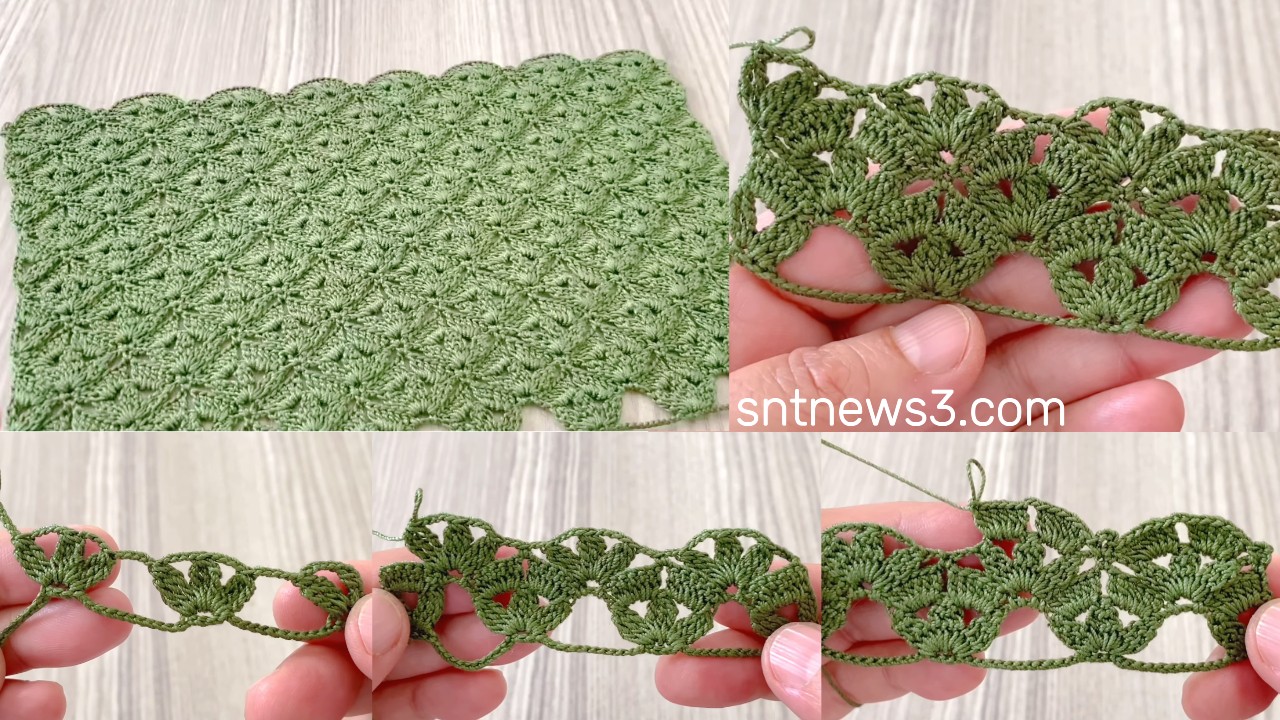
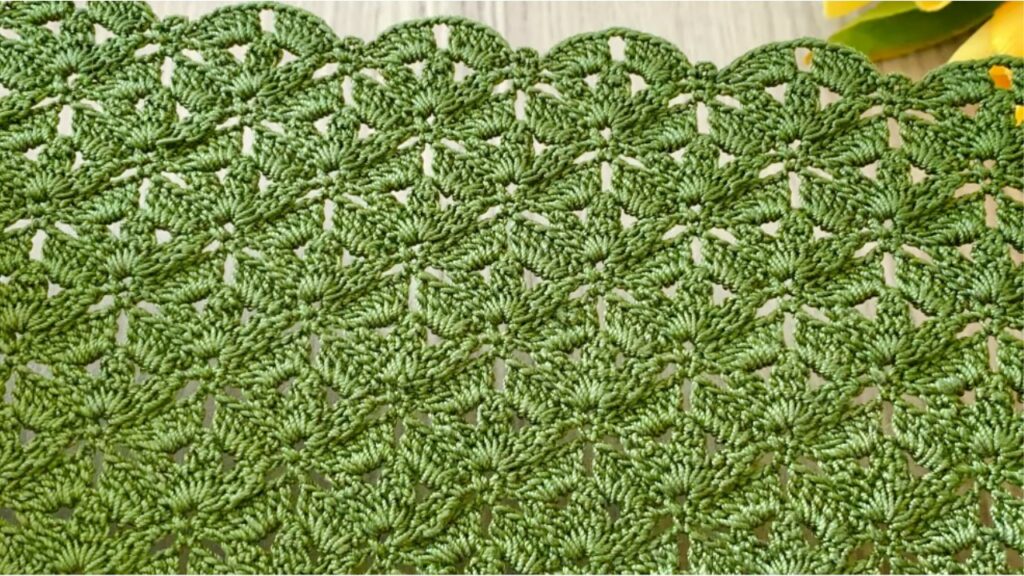
by Below is a complete, beginner-friendly round-by-round motif and clear assembly instructions so you can make a one-piece blouse or tunic (join-as-you-go) and a matching scarf from the same motifs. I give exact stitch groupings, checks after each round, blocking/finishing, sizing tips, and quick variations.
Summary / What you’ll make
- A lacy floral-medallion motif that converts to a joinable block.
- Join motifs into panels for a blouse/tunic or into a long strip for a scarf.
- Motif (blocked) ≈ 9–13 cm / 3.5–5 in with DK yarn + 3.5–4.5 mm hook (change hook/yarn to get desired size).
Materials & tools
- Yarn: Sport / DK / cotton-blend (cotton for crisp lace; softer blend for drape).
- Hook: 3.5–4.5 mm (match yarn & desired drape).
- Notions: tapestry needle, blocking pins/mat, scissors, stitch markers, measuring tape.
Abbreviations (US)
- ch = chain
- sl st = slip stitch
- sc = single crochet
- hdc = half double crochet
- dc = double crochet
- tr = treble crochet
- pic = picot (ch 3, sl st into base)
- sp = space
- st(s) = stitch(es)
Design notes
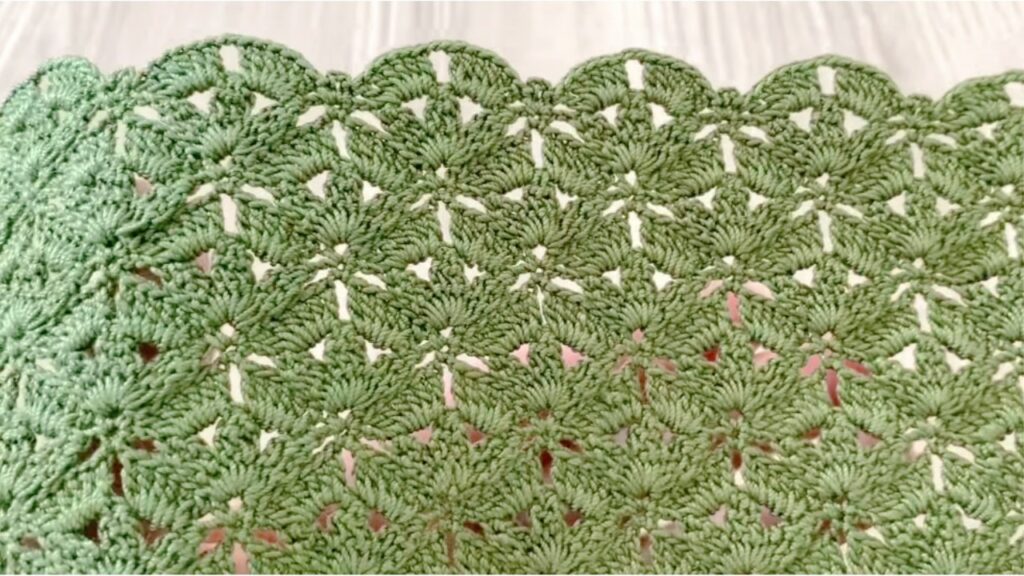
- 8-petal flower center → tidy sc round → tall chain arches with inner ribs → optional side/corner loops to square the motif → scalloped picot edge.
- Use Join-As-You-Go (JAYG) on final edge round to build one-piece garments with minimal sewing.
MOTIF — Round-by-round
Work rounds joined with sl st unless noted. Count/check after each bold check.
Round 1 — Center
- Make a magic ring.
- ch 3 (counts as dc), work 15 dc into ring. (ch-3 + 15 dc = 16 dc.)
- Pull loop tight, sl st to top of ch-3 to join.
Check: 16 dc.
Round 2 — Loop foundation (petal scaffolding)
- ch 4, skip next dc, sc in next dc — repeat around.
You create 8 ch-4 loops (and 8 sc). Join with sl st.
Check: 8 ch-4 spaces.
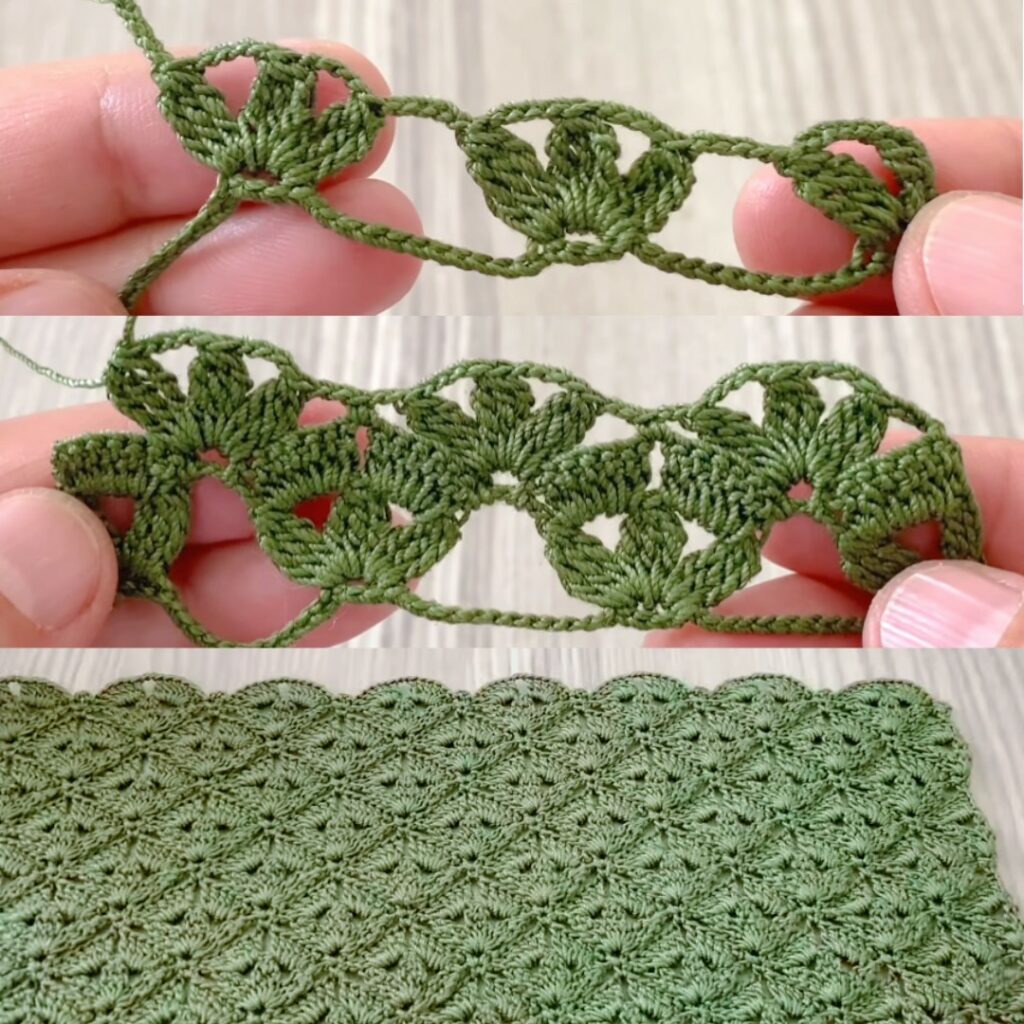
Round 3 — Puffy petals (8 petals)
- In each ch-4 loop work: (sc, hdc, 7 dc, hdc, sc) — all into the same ch-4 space (one cluster = one petal).
- Sl st to next loop and repeat for 8 petals. Join.
Check: 8 petals (full, rounded).
Variation: use 5 dc instead of 7 for smaller petals.
Round 4 — Tidy sc round
- Rejoin between petals. Work sc evenly around the petal bases to make a smooth circular boundary — aim for ~9–12 sc per petal area (distribute to keep flat).
- Join with sl st.
Check: outer boundary is smooth and flat.
Round 5 — Tall lacy arches (frame)
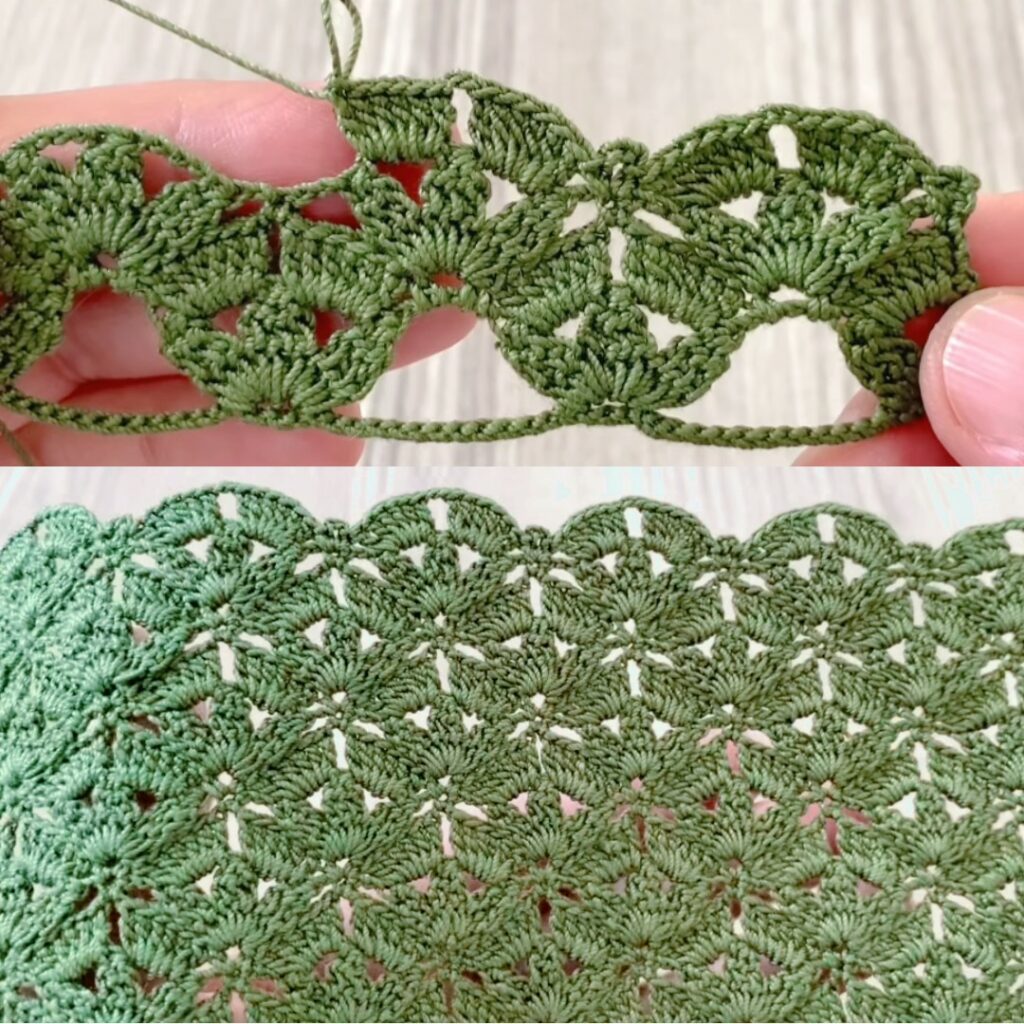
- From petal tip: sl st to the outer tip → ch 7 → anchor into the sc round between the next petals with (tr, ch 2, tr, ch 2, tr) worked into that sc or small space → sl st to petal tip.
- Repeat for all 8 petals to create 8 arches. (If ch-7 is visually off for your yarn/hook, use ch-6 or ch-8.) Join.
Check: 8 evenly spaced arches.
Round 6 — Ribs inside arches (decoration)
- Into each arch: sl st into arch base → ch 3 → dc into top of 1st tr → ch 1 → dc into top of middle tr → ch 1 → dc into top of last tr → ch 3 → sl st into arch base.
- Repeat around for all arches and join. (Simpler: 3 dc separated by ch-1 if you prefer.)
Check: each arch has 3 internal ribs.
Round 7 — Side & corner loops (square-conversion) — optional but recommended
- Mark 4 quarter points (every 2 petals). Rejoin at a quarter marker.
- Work each side between corners as: sc X, (sc, ch 4, sc) repeated Y times, sc X, then ch 6 at corner for corner loop.
- Important: use identical X and Y on all sides so motifs match when joined. Example (starter): sc 10, (sc,ch4,sc) × 3, sc 10 → ch 6 corner. Adjust to your motif size.
- Join and fasten off (or continue to last round).
Check: 4 corner ch-6 loops and evenly spaced side loops.
Round 8 — Scallop & picot finish (join round)
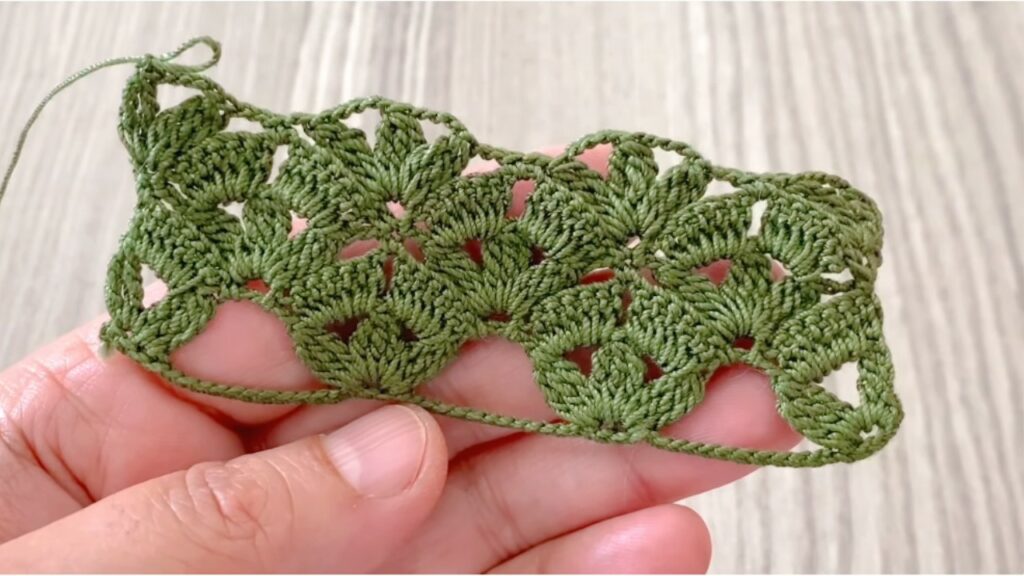
- Rejoin and work the outer scallop: sc 3 across each small curve, (pic: ch 3 + sl st into same st), sc 4 — adjust counts so scallops lie flat across sides.
- This is the round where you JAYG: when a stitch meets an adjacent finished motif, replace the sl st/picot with sl st into the corresponding stitch/picot of the neighbor to join. Continue around. Fasten off and weave ends.
Check: scallops & picots even; motif lies flat after blocking.
BLOCKING & FINISHING
- Block motifs pinned to desired size/shape. Pull corner loops outward for crisp corners and pin picots for sharp points. Mist lightly or use steam; let dry completely. Blocking is essential for lace to open and for seams to match.
JOINING METHODS
Join-As-You-Go (JAYG) — recommended
- Work motifs up to last round (Round 8). When working Round 8 on a new motif, every time you reach a location that should meet a finished motif, replace that outer stitch with sl st into the corresponding stitch/picot of the finished one. Attach at side loops and corner loops. JAYG gives flat, tidy joins and saves sewing.
Sew-after (block then sew)
- Block all motifs. Lay out. Use a tapestry needle and matching yarn to mattress stitch or whipstitch through side loops or outer sc rounds. Gives flexibility to adjust layout before joining.
PROJECT CONSTRUCTIONS
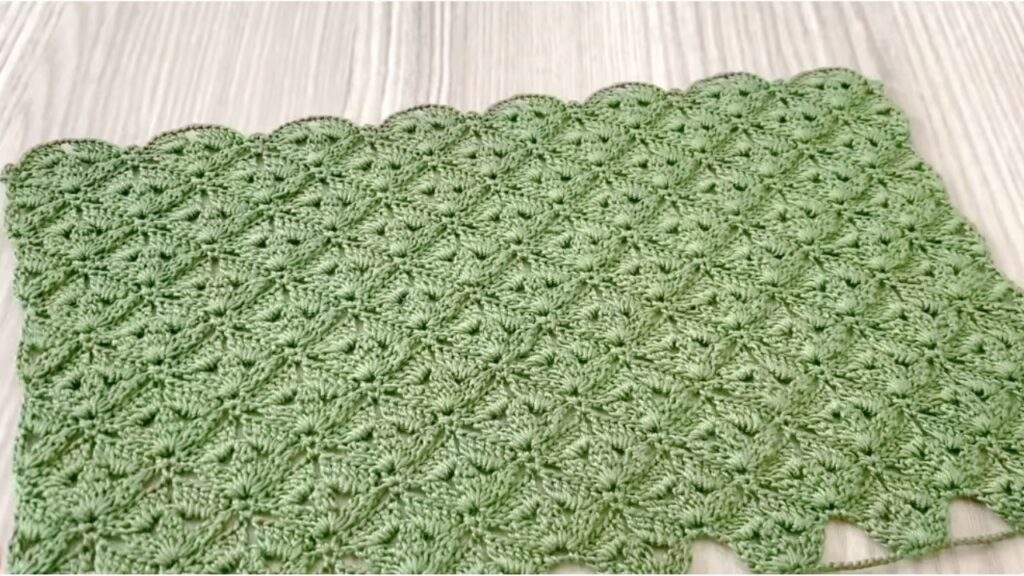
One-Piece Blouse / Tunic (JAYG; top-down approach recommended)
- Decide finished measurements (bust circumference, desired length). Measure your blocked motif width M.
- Motifs across (half chest) ≈ round(half-bust ÷ M). Example: motif 11 cm; half-bust 46 cm → 46 ÷ 11 ≈ 4 motifs across top row.
- Top row / neckline: make the top row of motifs across the front (and continue across back if making one continuous sheet). For a round/boat neck, leave the center joins open to shape the neckline (skip join at center 1–2 motifs).
- Add rows downward: join motifs row by row using JAYG to connect to the previous row. Continue until desired torso length. For a tunic, add more rows.
- Armholes: leave side joins unworked for armhole height (cap sleeve: 1 motif height; short sleeve: 2; long sleeve panel: more). You can also make sleeve strips separately and JAYG attach.
- Finish neck/armholes: pick up stitches and work 2 rounds sc; add 1 round picot or decorative eyelet if desired. Hem can have a row dc for weight.
One-piece continuous method: work motifs across and down in a single sheet, leaving centre gap for neck. This produces a true one-piece pullover with minimal sewing.
Scarf / Stole
- Make motifs and join them end-to-end (1 × N) or 2 × N for wider scarves. Use JAYG or sew-after. Finish with a scallop border or fringe. For drape, use a softer yarn and larger hook.
SIZING CHEAT-SHEET (quick)
- Block 1 motif, measure width M.
- For blouse: motifs across for half-bust = desired half-bust ÷ M. Rows length = desired torso length ÷ M.
- Example (motif ≈ 11 cm):
- Small top: front = 4 × 3 motifs (4 across × 3 down) → adjust rows for length.
- Tunic: 5 × 6 motifs per panel, or one sheet 10 across × 6 down split for neckline as desired.
FINISHING TOUCHES & EDGING
- Neat finish: 1–2 rounds sc around neck/arm/hem.
- Decorative: picot round, shell scallop (5 dc shell), or a weight round (dc) at hem for better hang.
- Lining option: add a lightweight lining for modesty if motif is open (blouse).
TROUBLESHOOTING
- Motifs cup up: loosen tension or go up 0.5 mm hook for the petal/arch rounds; block firmly.
- Motifs ripple: shorten arch chains (ch-6 instead of ch-7) or reduce sc in Round 4.
- Joins gap: add an extra sl st at join points or tighten sewn join; JAYG works best when motifs are blocked prior to joining.
- Sides mismatch: ensure Round 7 side & corner counts are identical for all motifs.
VARIATIONS & STYLING IDEAS
- Two-color: change color after Round 3 (petals) for a contrasting flower/frame.
- Smaller motif for delicate scarf/neckline: use fingering yarn and smaller hook; reduce petal dcs (7→5).
- Bigger motif for bold tunic/cover: thicker yarn & larger hook or increase center petal dcs (7→9) and ch length in arches (ch-8/9).
- Beaded: add a bead at each arch rib or picot (slide bead on yarn before stitching).
- Fringe: add fringe to scarf ends; or a weighted dc round to keep blouse hem hanging nicely.
VIDEO: